Fractal Particles
Project Overview
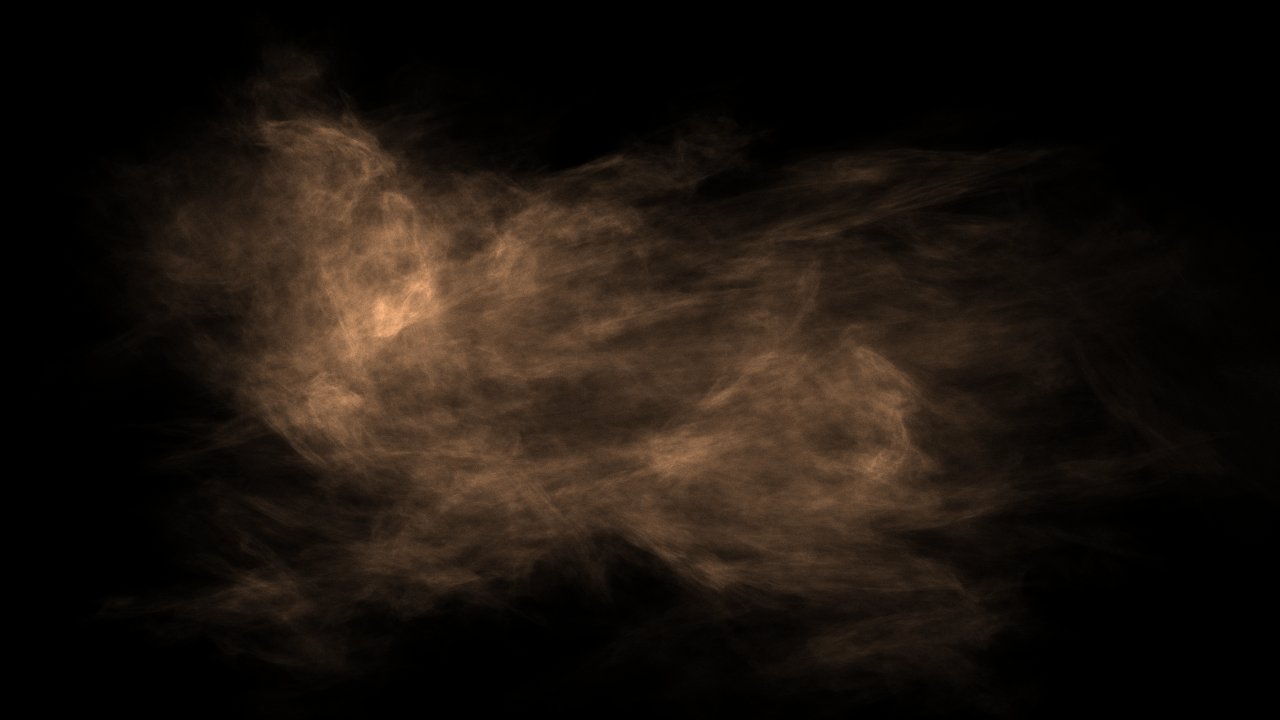
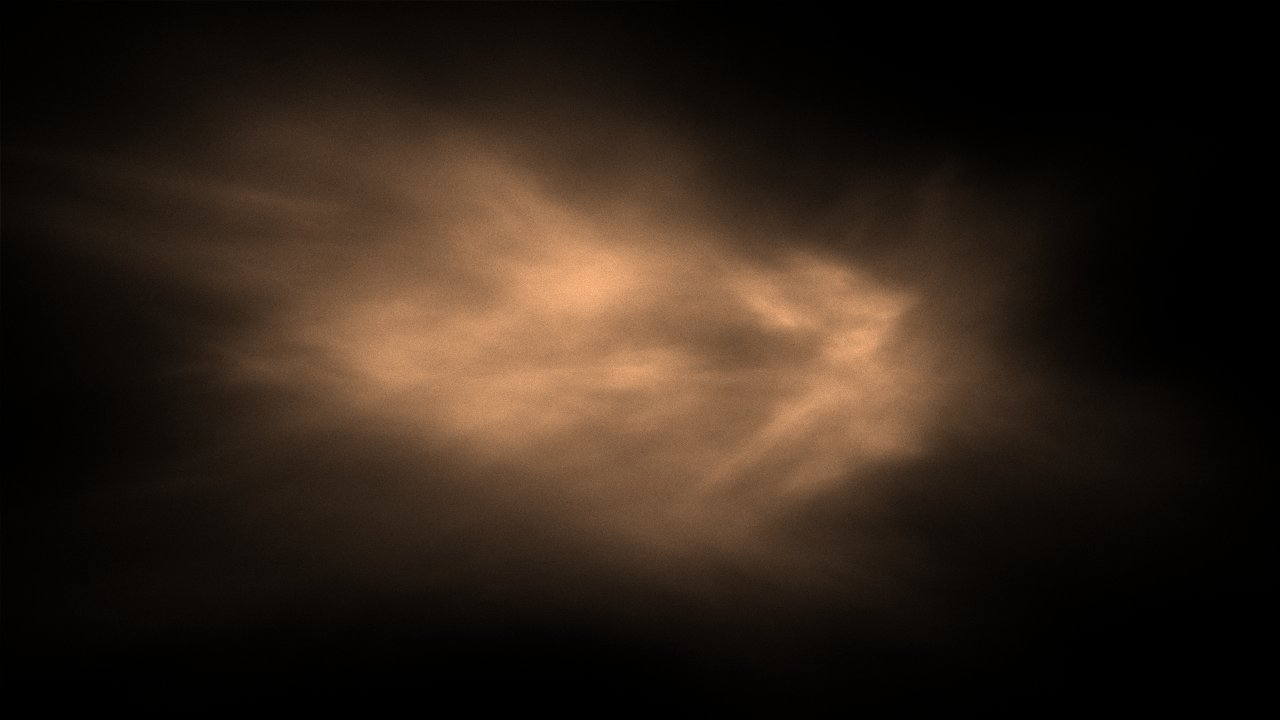
Animated 3D fractals made of particles (100,000 per frame, accumulated over many frames), rendered on the CPU in C++. I saw Acerola make something like this, thought it looked cool, and wrote my own version from scratch, focusing on making it fast.
How It Works
The fractal is an iterated function system, drawn with the "chaos game":
- Pick a few random 3D affine transforms (scale, rotation, shear, translation).
- Start with a cloud of random points. Every step, move each point by one of the transforms, picked at random.
- After a few iterations the points settle onto the fractal that those transforms define.
To animate it, the program smoothly interpolates each transform toward a new random target, then picks another target when it gets there. The fractal keeps morphing into new shapes.
Rendering
I tried a few different renderers:
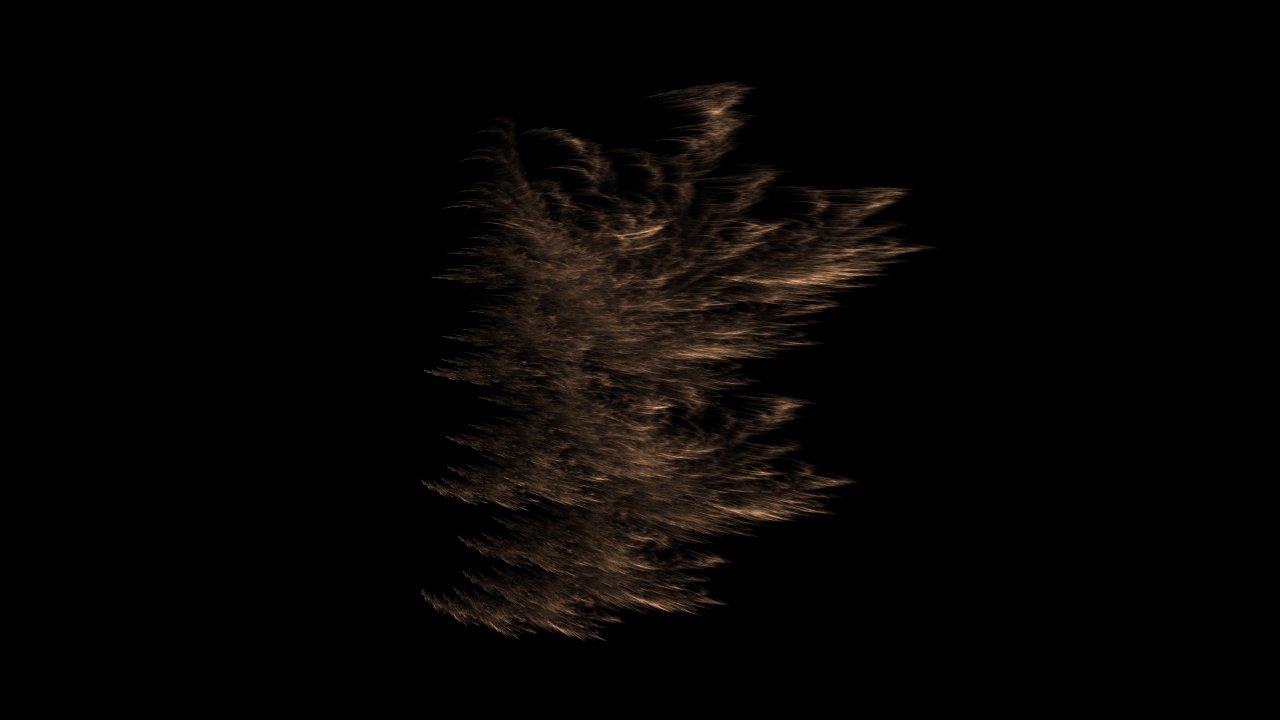
- Point splatting: Project every particle onto the screen and accumulate how many land on each pixel, then map that density to brightness. Accumulating over several frames smooths out the noise.
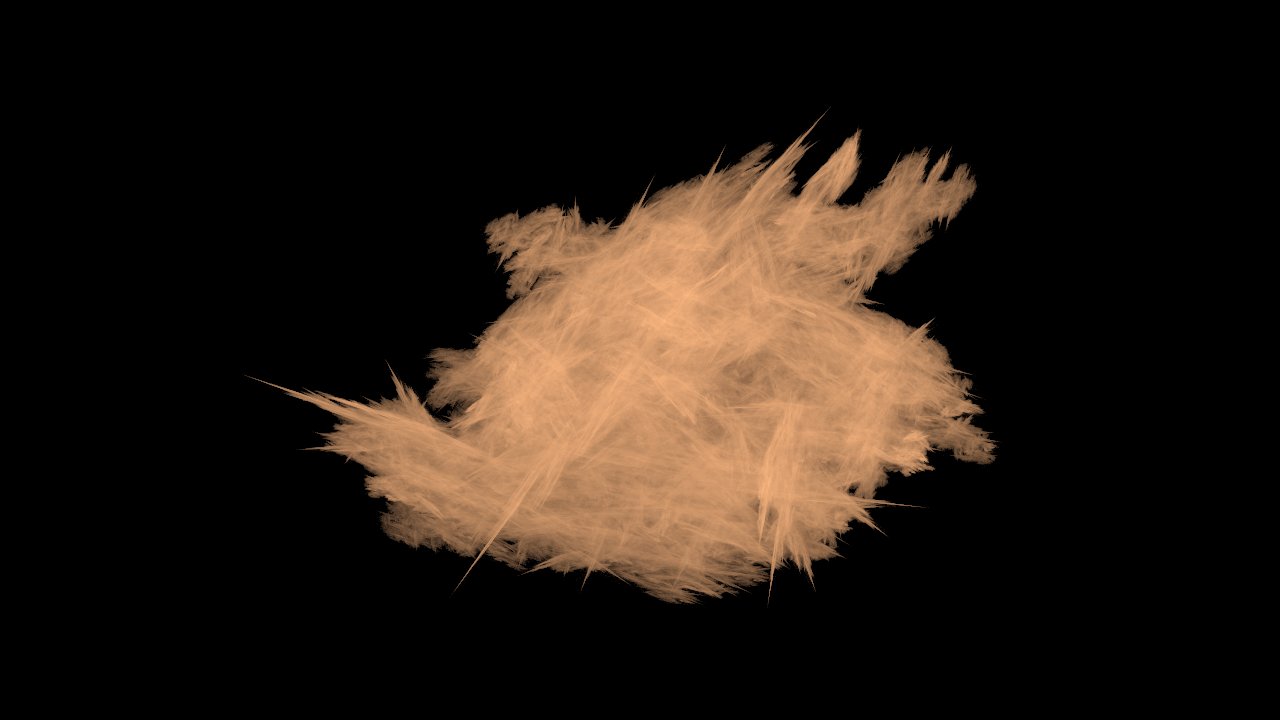
- Ray marching: Treat the fractal as a volume of density, march a ray through it for each pixel, and attenuate light as it passes through (Beer-Lambert absorption), so the fractal looks like glowing smoke instead of points.
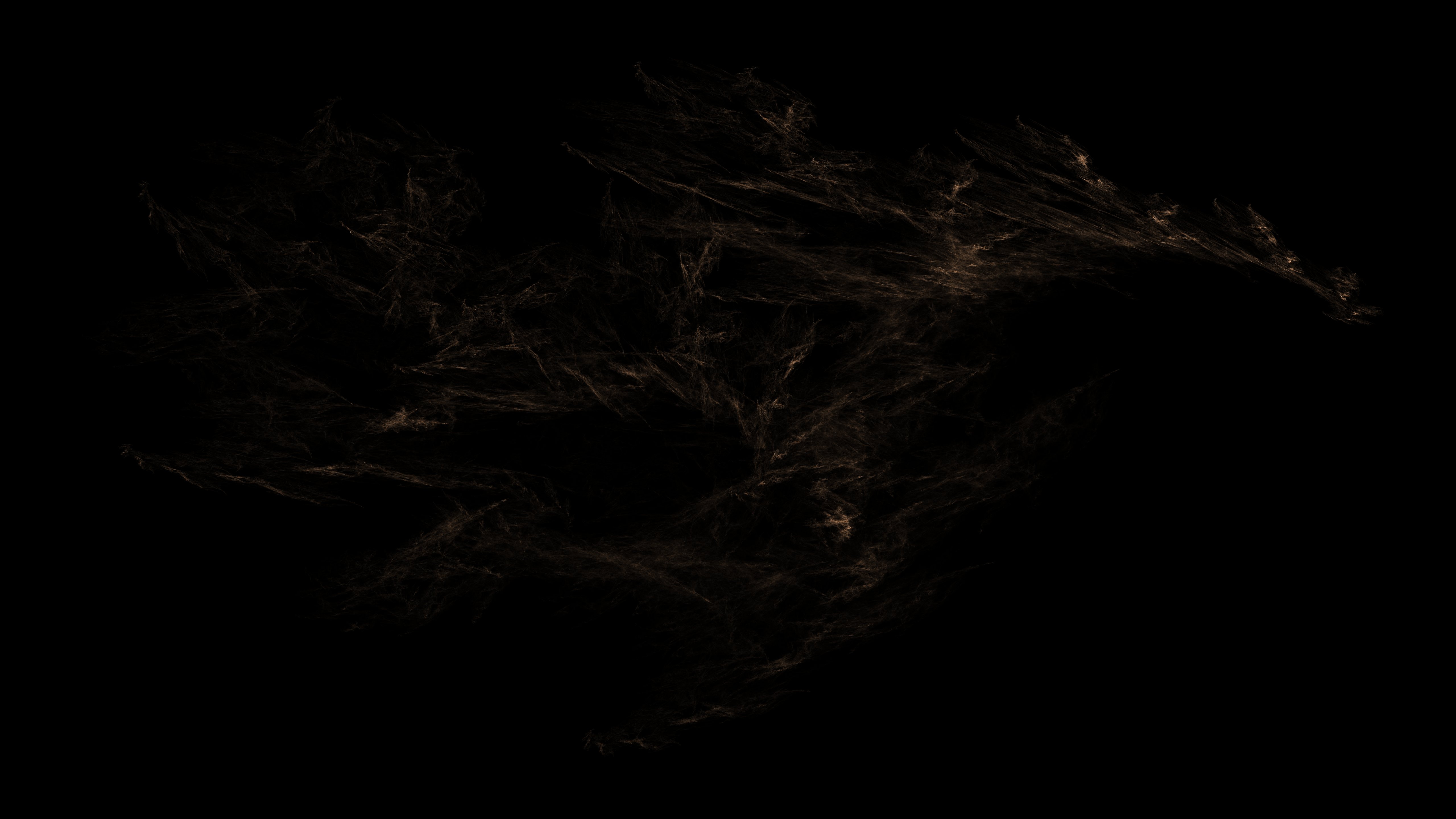
- Discrete ray marching: First bin the particles into a 3D grid of densities, then ray march through the grid, which is much cheaper to sample.
Everything runs on the CPU, compiled with aggressive optimization flags (-O3 -march=native -ffast-math), with per-frame values precomputed outside the hot loops. There is also an offline mode that renders frames to disk to stitch into a video with ffmpeg.
Gallery
What's Next
I've learned a lot more about CPU optimization since I wrote this (SIMD, cache-friendly memory layouts, multithreading), and I could make it much faster now. It would also be a good project for learning Vulkan to run it on my laptop's GPU, since OpenCL doesn't handle its unified memory well.
Technology Stack
- C++
- GLM (vector math)
- SFML (window and display)
- ffmpeg (video export)